
What is a Solar Loan? Understanding Solar Financing Options
If you are considering solar power for your home, you’ve likely done some research and learned that depending on the size of your system, you could be spending a lot of money on initial installation costs and registration fees. Solar is a great investment in the long run, and if you are looking at solar for other reasons like energy independence, the initial cost begins to pay for itself quickly. However, if you don’t have the means to pay for these installation costs out of pocket, what should you do? Fortunately, there are various financial institutions that offer solar loans.
What Are Solar Loans?
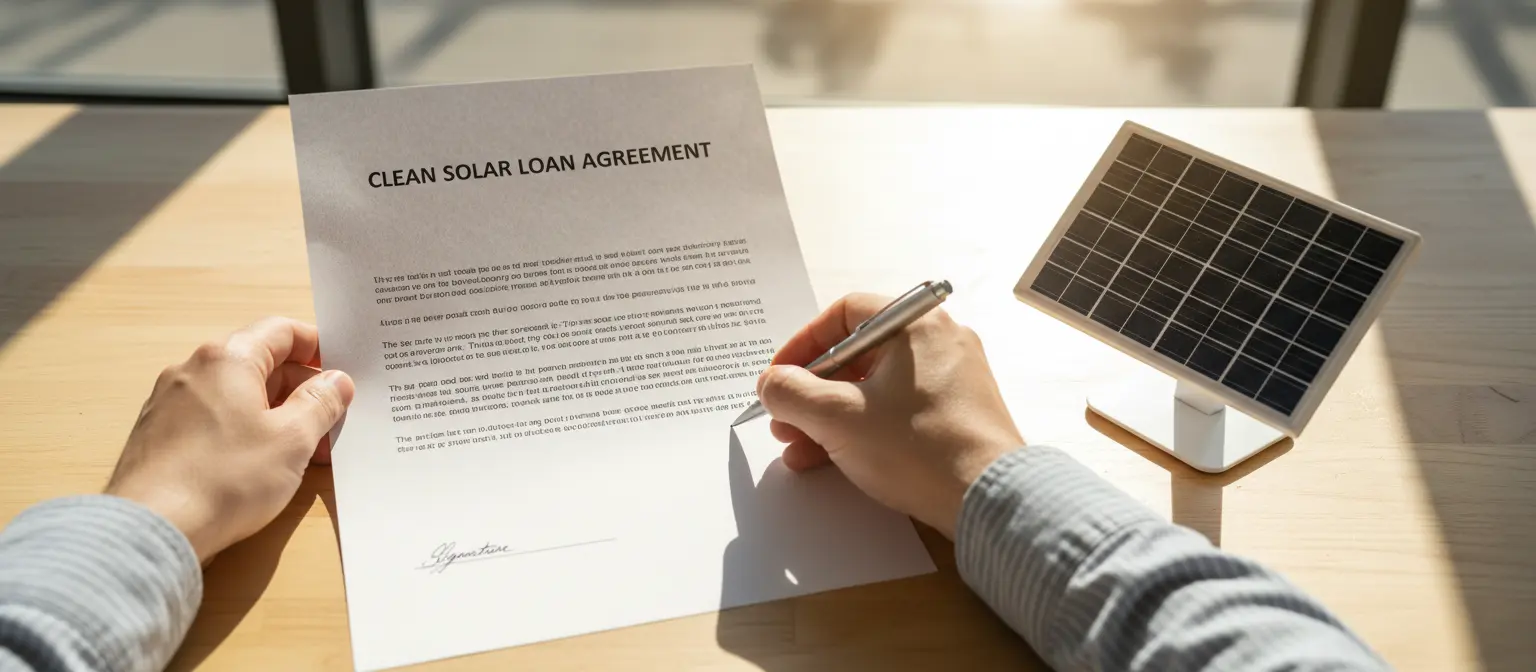
A solar loan allows homeowners to finance the purchase of a solar energy system instead of paying the full cost upfront. Like other types of loans, you borrow money to purchase the system and repay it over time through monthly payments.
Because you own the solar system, you may be eligible for available tax credits and incentives, depending on your individual circumstances. Loan terms, interest rates, and qualification requirements vary by lender, so it’s important to compare your options before making a decision. A solar loan is just one way to finance — another option is Third-Party Ownership (TPO), which includes solar leases and Power Purchase Agreements (PPAs).
A solar loan is just one way to finance a solar energy system. Another option is Third-Party Ownership (TPO), which includes solar leases and Power Purchase Agreements (PPAs). We’ll explain these financing options in more detail later in this article to help you determine which approach best fits your needs.
How Solar Loans Work
Once you’ve selected a solar installer and received a system proposal, you can apply for a solar loan through a participating financing provider. If approved, you’ll repay the loan through fixed monthly payments over an agreed-upon loan term.
When considering a solar loan, it’s helpful to understand:
- Monthly payments: Your payment amount will depend on factors such as the loan amount, interest rate, and repayment term.
- Loan terms: Solar loans are available with a variety of repayment periods, allowing homeowners to choose an option that fits their budget and financial goals.
- Approval process: Lenders typically evaluate factors such as credit history, income, and other financial information when reviewing an application.
- Installer involvement: Many solar installers work directly with financing providers to help guide homeowners through the application process and coordinate financing as part of the overall solar installation experience.
Before selecting a loan, compare financing options carefully and review the interest rate, repayment terms, fees, and any prepayment options so you understand the total cost of financing your solar investment.
Benefits of Solar Financing
For many homeowners, financing makes it possible to install a solar energy system sooner without making a large upfront investment. Rather than paying the full cost at once, financing spreads the expense over manageable monthly payments while allowing you to begin generating your own electricity.
Some potential benefits of solar financing include:
- Preserving cash: Keep your savings available for emergencies, investments, or other financial priorities instead of using them for a large upfront purchase.
- Spreading costs over time: Monthly loan payments can make solar more affordable by distributing the cost over the life of the loan.
- Access to solar sooner: Financing may allow homeowners to begin benefiting from solar without waiting to save enough money for a cash purchase.
Whether financing is the right choice depends on your financial goals, budget, loan terms, and available incentives. A qualified solar installer and financing provider can help you compare your options and determine the financing solution that best fits your needs.

Questions to Ask Before Financing Solar
Before committing to a solar loan, take the time to understand the financing terms and how they may affect your long-term costs. Asking the right questions upfront can help you compare lenders, avoid surprises, and choose the financing option that best fits your financial goals.
Consider asking the following questions:
- What is the interest rate? Understand whether the rate is fixed or variable and how it will affect the total cost of the loan.
- What is the loan term? Review the repayment period and how it impacts your monthly payment and overall financing costs.
- What will my monthly payment be? Compare your expected loan payment with your current and projected electricity costs.
- Are there any fees? Ask about origination fees, dealer fees, closing costs, or any other charges that may be included in the financing.
- Can I pay off the loan early? Find out whether there are prepayment penalties or if you have the flexibility to pay off the loan ahead of schedule.
- Are tax credits or incentives assumed in the financing? Some loan structures may assume you’ll receive and apply available tax credits toward the loan balance. Make sure you understand these assumptions and consult a qualified tax professional to determine your eligibility.
A reputable solar installer and financing provider should be able to explain each of these topics clearly so you can make an informed decision with confidence.

Solar Loan vs. Cash Purchase vs. Third-Party Ownership (TPO)
There are several ways to go solar, and the right option depends on your budget, financial goals, and whether you want to own your solar energy system or have a third party own and maintain it.
| Option | How it Works | Best For |
|---|---|---|
| Cash Purchase | Pay for the solar energy system upfront and own it from day one. Homeowners who own their systems may be eligible for applicable tax credits and incentives. | Homeowners looking to maximize long-term savings and avoid monthly financing payments. |
| Solar Loan | Finance the purchase of the solar energy system and repay it through monthly payments over an agreed-upon loan term. You own the system while paying off the loan. | Homeowners who want the benefits of ownership without a large upfront investment. |
| Third-Party Ownership (TPO) | A third-party company owns, operates, and maintains the solar energy system installed on your home. Instead of purchasing the system, you pay to use it through one of two financing structures. | Homeowners looking for little or no upfront cost and a simplified solar experience. |
Types of Third-Party Ownership (TPO) agreements:
- Solar Lease: You pay a fixed monthly fee to lease the solar energy system. The third-party provider owns and maintains the equipment while you benefit from the electricity it generates.
- Power Purchase Agreement (PPA): Rather than paying for the system, you pay for the electricity it produces – typically at a set price per kilowatt-hour, which may be lower than your local utility’s retail rate.
Each financing option offers different benefits and responsibilities. A qualified solar installer can help you compare ownership, financing costs, available incentives, and long-term savings potential to determine which solution best fits your home and financial goals.
Conclusion
Investing in solar power is a great way to support the environment, improve your energy independence, and save money on your monthly expenses. Solar loans are a great way to pay for solar panels today to get your system up and running. If you need financing for solar panels, you can contact EnFin. We are a trusted lender that specializes in financing residential solar systems.
Ready to Finance Your Solar System?
EnFin, backed by Qcells, specializes in financing residential solar systems. Connect with us to learn more about flexible solar loan options that fit your budget and energy goals.